Translating my Mythic Fantasy into ART with Illustrator ERINYE
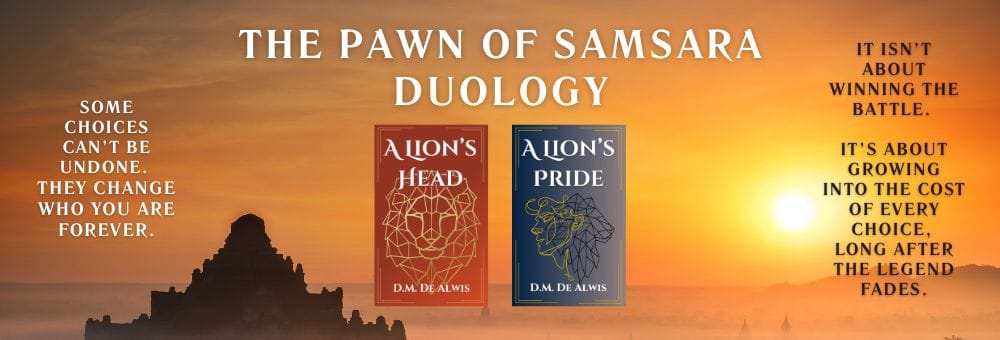
Let's talk about the original covers for A Lion's Head and A Lion's Pride which make up the Pawn of Samsara duology and unpack why I didn't immediately hire an illustrator for my work. I'll also deep dive into how I find and work with my illustrators but more importantly—the why.

While waiting for literary agent feedback for the PAWN OF SAMSARA friends and family would frequently goad me on saying I should just indie publish. One of the very real road blocks for me was how I would wax and wane over producing a cover worthy of the work.
In the end, I would be convinced by a friend bluntly reminding me that Tolkien and others published with zero cover art at one point in time. Hardcovers with lost dust-jackets have no images. If the story was adequately vivid—it will live in the heads of readers. An artist discovering my work, might feel compelled to create art—or be convinced to work with me on subsequent publications.
Illustrator Chris Ho (@algebutter) would go on to illustrate my middle grade book about pre-teen Ashan trying to evict a demon carrying pink eye from his house. Chris is an exceptional horror artist, illustrator, and graphic novel designer based in Toronto who is often inundated by the demands of the local gaming and comic book industry.
THE PAWN OF SAMSARA is a little different. I was holding out for an illustrator who was so steeped in mythology that they would connect with my work. This work is an ADHD'ers dream—the art should reflect the many layers. I want an artist who can grasp what is needed to tease the depth of the volume to my readers.
Why not use stock images for your covers?
I was on a recent panel at Fanexpo Toronto where we discussed the unique challenges faced by BIPOC authors, especially low-budget indie published BIPOC authors.
Stock photos are of no use when they won't convey the costumes, time period, nor the elements of what an author is trying to convey. Everything is colonial, stereotypical, or worse—AI generated. For evidence of how AI fails, see this exploratory though dated article.
The AI witch hunt targets BIPOC authors while leaving others unscathed. More importantly, AI unapologetically plagiarizes the creativity of others. For one who values human creativity—its a no brainer to want a very human artist creating illustrations that will represent my work.
I see a clear difference between the 'art' representing my work in the long term and the throw-away images that may serve for early concept development or for early-stage social media advertising. If you're paying me money for a product, that product will not contain AI generated content. See my AI Use Policy for what I mean by this.
I used Canva for the original covers before Canva AI was a thing. Canva comes with its own IP issues and horror stories. Having done some research, I kept my original cover art generic with no internal page elements during publication.
For cover design, I focused on my strengths built from decades developing websites: contrast, colour, and mood. The covers are in a much-repeated style that is recognizable to readers of epic or historic fantasy. Interested in my earlier drafts and process? See this article.
The first book is about a god created construct succeeding in his given task.
The second book is about the dual nature of that man-lion and his struggle to find peace.
Why not just keep going in the same style with your covers?
The problem with going back to Canva: AI generated covers, Canva AI, and the advent of AI in all things scares the hell out of me. Its harder to use Canva after 2026 when most of the stock elements are AI generated.
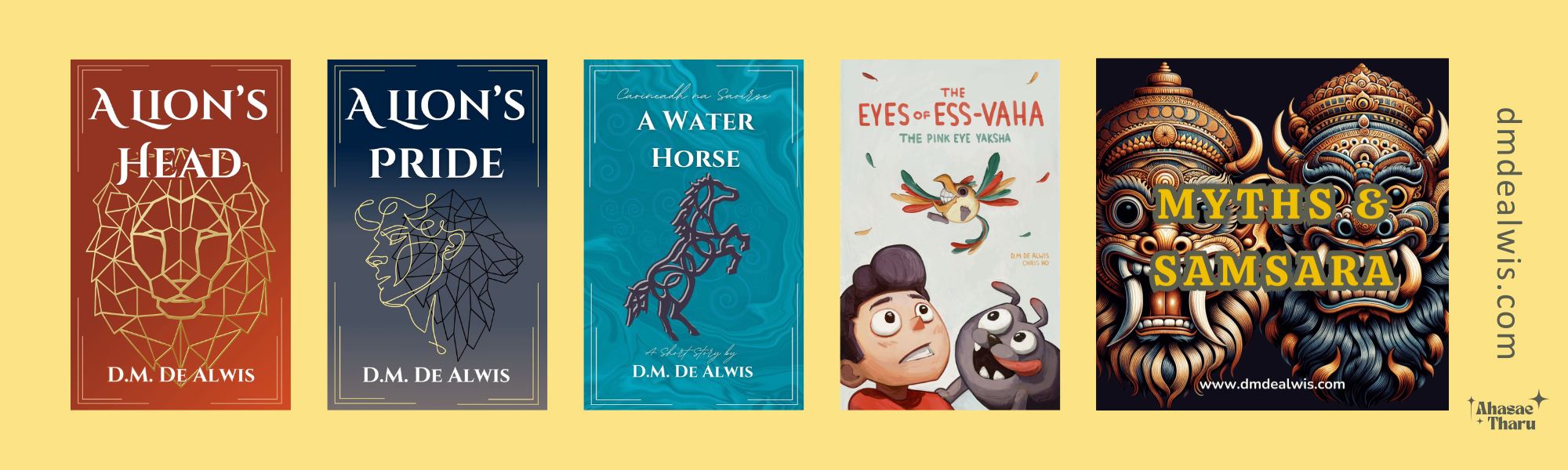
For A WATER HORSE, I asked a friend with a talent for drawing to give me a drawing of a horse. I wanted the 'celtic' vibe without having to use AI. The 3D effect was created by overlaying the horse image multiple times in different colours. The 'watery' feel of the cover comes from manually adding stock triskelions and using a turquoise marble stock image. The result is dramatic, rich, and textured.

As of my writing this article, if a published work contains AI generated elements (even a small image), it may be barred from distribution by Amazon and Ingram Spark. Meanwhile, the big publishers are using their clout and pushing for AI use to reduce expenses.
 Adam Morgan
How to find illustrators IRL
- Go to Comicon, Fanexpo, or your favourite artist's alley.
- Walk until someone's work stops you in your tracks.
- Ask them for their business card.
- Do your research.
Illustrator ERINYE
I can't say that I have met Montreal-based illustrator Erinye (@erinyeart) in the real sense. While at Fanexpo Toronto 2026—as one of the millions of people who were slowly walking through the aisles of Artist Alley—ERINYE's booth stopped me in my tracks. I'm sure the person behind me had to wait patiently as I quietly interrupted her transaction—she was busy—and acquired her business card.
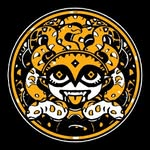
"Do you do book covers?" Is a great opening line. I returned to the Book Nook with her business card. A couple of weeks later, I DM'd her on Instagram. She looked up my work, downloading a copy of my books and reading them before we began our back and forth for what I needed.
Check out her creativity in action...
What drew me to working with ERINYE, the artist?
When I had time to think after Fanexpo, I looked up ERINYE's instagram account and website. From what I saw there, my initial reaction was confirmed.
- She defines herself as a mythology inspired artist.
- She can draw brown characters.
- Her characters come in all shapes and sizes with an assortment of expressions.
- Her works tell a story in action—there are still and moving parts.
- Attention to the details—what she chooses to elaborate, her architecture and use of lines.
- Ability to illustrate in both light, dark, and mixed palettes.
- I appreciate her version of Gandalf and several mythological characters.
- I feel I can trust her instinctive interpretation of my characters.
My initial ask was for a poster I could use for promotional materials for IndieFusionCon in November. I didn't know if the timeline would be sufficient.
I also plan to issue an Omnibus of PAWN OF SAMSARA (both titles in one book) including image inserts of the characters some time in late 2027—before I publish the next set of books.
We drafted a contract agreeing to terms and dates. Illustrators prefer working to a deadline. As an Indie author I'm a little too flexible with my dates.
ERINYE is delivering me a poster and some stickers with a slight delay. But her work is remarkable.
Subscribe to my newsletter to continue reading—it's free.
The remainder of this article is a reveal of the drafts of ERINYE'S illustrations, how we shared ideas, my initial reaction, and how I will use them for promoting A LION'S HEAD at Indie Fusion Con in November.
Subscribers to my newsletter receive A free ePub copy of A WATER HORSE.