Exploring Toxic Productivity
I never expected to come face to face with the dark side of productivity. The phrase "you can take a break" began to induce heart palpitations. All of my identity and self-worth is tied to doing. In this essay, I sit down to have tea with the demons of toxic productivity and procrastination.


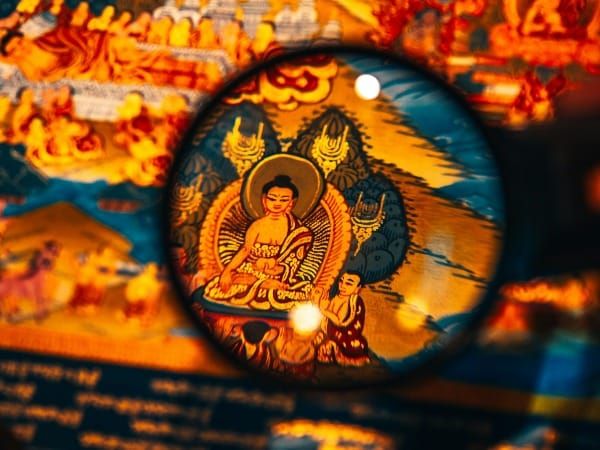
The Buddha, soon after achieving enlightenment, was confronted by the demon Mara who urged that he continue the rest of his days in silence. "You have achieved what you had set out to do," the demon said. The Buddha listened with consideration, and decided to spend his time as a teacher to any who sought and could grasp his teachings. Yaksha or demons are obstacles, ailments, or fears that are to be considered and overcome. Later, the Buddha would sit down several times with Mara and various other demons. He exemplified facing your fears on your own terms.
While exploring toxic productivity, I had to face my shadow, mental illness, and demons. I've spent the last couple of years obsessed with productivity. The stressors of workaholism had superseded my sense of excitement/joy in life.
This is my exploration of this demon of toxic productivity who in non-demonic form would be called productivity. His demonic cousin is procrastination whose non-demonic form would be rest.
Objectives are achieved but satisfaction is denied.
During a recent conversation with my editor over her frustrations from years of hard work and limited outcomes, I was able to reflect on how much mindset plays a part in our ability to immerse ourselves in the grind.
We suffer from accomplishment amnesia, or moving goalpost syndrome which occurs when individuals become so focused on meeting obligations and moving to the "next thing" that they forget or fail to appreciate their successes. In the run up, we think that the win will result in lasting happiness but instead, we experience what is called arrival fallacy (also known as summit syndrome) accompanied by hedonic adaptation, a neurological process where the feeling of accomplishment is overridden because we've already shifted our focus to the next task.
That she and I have published multiple books, attended multiple panel and author events, conducted workshops, and even been recognized by at least one award each; ultimately, gives us no sense of value in the face of our current perceived challenge, usually with respect to our next Work In Progress or our limited time and abilities to market and sell books.
Hustle culture is a race through never-ending grind.
As a product manager I saw this with our Kanban roadmap and sprint cycles. One feature would be rolled out only to be forgotten under the weight of the bugs for the next feature being rolled out. While marketing and customer service celebrated our wins, the development team was buried under its next set of objectives—feeling like failures for never accomplishing anything. You will never get to 'done'.
Productivity isn't an issue in a work environment. However, while sitting down to tea with the demon of procrastination, tools to improve individual productivity tell us to set intentions and SMART goals. The very definition of a SMART goal is a goal which is Specific, Measurable, Achievable, Relevant, and Time-Bound. Adversely, tackling procrastination pushes for outcome-driven goals which lead to an abundance of outcome-driven intentions and an absence of rest-driven intentions.
We become addicted to being productive when there is no prioritization of goals for rest or reset.
How would you apply SMART goals to a rest-driven intention? As an illustration: can we prioritize standing on your deck, drinking a coffee, while watching the sun-rise. The measurement of happiness or satisfaction isn't tangible. The weather might be nippy, we might be bothered by wasps, and it may start raining. A new SMART goal to this order might be Grounding Myself: Notice something about my environment for 10 minutes and pick one word for how I feel before and afterwards. While it might feel awkward at first, baking rest-driven outcomes into your task list will serve to create a tangible habit.
Further, when faced with a busy week, what task do we prioritize over others? I frequently give up walks and calls to friends in lieu of achieving a win with my children, or completing an outcome-driven task on time. While it is true that productivity increases when rest-driven tasks are built into your day—the reality is that most of us will deprioritize them in favour of checking emails, a quick doom-scroll, or making dinner.
Rest and relaxation-driven tasks are deprioritized while prioritizing outcome-driven deadlines.
Nature dictates we go at a slow and steady pace.
We live in a society that grants status and reward to people who can hold a steady job. How much does being productive contribute to my feeling of safety? To paraphrase something I heard Trevor Noah say on his podcast "What Now?", I am defined by what I do but I am not defined by my job. Yet how much of what I do is defined by the title I hold? I often rail against productivity hacks on account of the unseen jobs I hold—that of mother, friend, daughter, partner, and life-long-learner. These roles take up all the remaining time in my existence outside of authoring or whatever career hat I am wearing. We are not binary in the way we live our lives.
Why is it so hard to rest? We think we only have this one life. It's a fallacy. We have countless lives to live even within this one life. How do we braid these lives together like sweetgrass?
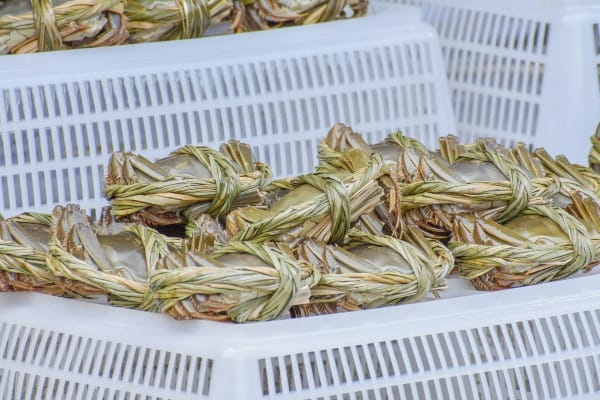
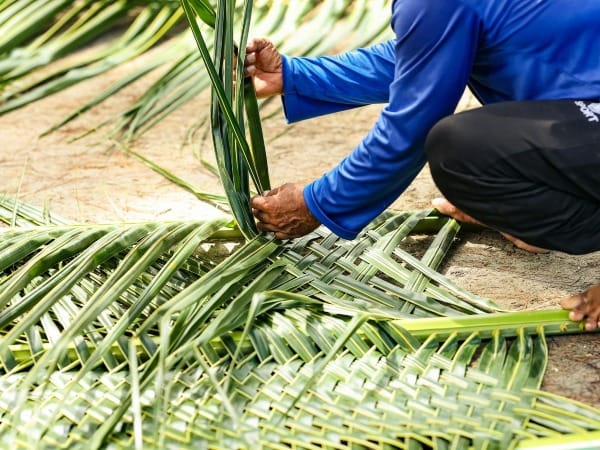
To indigenous people, sweetgrass symbolizes life, growth, and the life cycle. The grass is cut and dried. This brittle form is soaked until it is pliable. Then, this pliable grass is braided or woven and then re-dried. I feel like there are some parallels here to productivity. While the grass is versatile in use and desirable for its scent—it has to go through careful processing to be used. Drying and soaking cycles are akin to the rest and relaxation driven tasks. They take time to carry out. Productivity cycles are akin to making something from the sweet grass. Then there is the final appreciation when the final product is presented and used. Appreciation happens in real time every time you encounter a product whether it's a stuffed pillow, a scented wreath, or as a flavour. One final indigenous teaching, paralleled in Buddhism, is take nothing that is not given and then, take only what you need.
Productivity is the commodity. Take what I need to thrive, that is freely given. Receive the outcomes of my effort every time I encounter them.
To thrive, I can't be the victim of my productivity. How do I change sides? Intentional rest-driven outcomes. Intentionally setting my pace. Intentionally savouring victories repeatedly as I can.
For example, as I set up for a book signing event at IndigoSpirit at the Upper Canada Mall this weekend—I can reflect on my journey to publishing A Lion's Head and A Lion's Pride and my countless successes to date in book selling. I can feel gratitude for the journey that has led me to having my revised posters and the positive reviews and feedback received. I can also reflect that this is only one stop on a long journey. There are more books to come, and more marketing and book sales as well. There is no final destination to this journey.
As I look toward my next chapter in education and technology, I'm bringing all of these lenses with me—the product manager who understands agile sprints, the educator who understands how people actually absorb knowledge, and the creator who knows how to build from scratch.
In the meantime, I continue with the journey. As a teacher, I complete AQs and as an author, I write books. As a mother, I parent. As a wife, I share my life. The journey is exciting.
Tie it together with grace.
How to ground, express gratitude, and practice self compassion before confronting your demons.
Take a moment to reflect on your blessings in life no matter how many or few. For me, this was practicing meditation for half an hour this morning. This may look like taking a long walk or a workout at the gym for another. I found a safe space where I would not be interrupted and had a meal, drank my tea, and listened to the news. Then I reflected on my blessings with gratitude:
- Building from the ground up: I learned to write, market, and publish my books as the CEO and founder of Ahasae Tharu Publishing. Authoring books takes years of unpaid labour and investment. I am grateful for the creative drive and community that sustain it.
- Redefining my worth beyond job titles: Letting go of my former career titles helped me confront my biases around caregiving and interdependence. I have learned to be humble, strengthened my marriage, and appreciate my partner who has supported me through the transition. I am here to serve—volunteering and advocating for literacy.
- Choosing lifelong learning over hustle: Going back to school to learn new skills, my experience with classroom management, and seeing the next generation plod forward gives me faith that my inner compass is leading me towards the right next venture.
I have a home, a family, a clear head and the drive to keep creating and learning. I am good with being here. I am present.

D. M. De Alwis is a Sri Lankan Canadian author, educator, and product manager who writes prehistoric fantasy rooted in South Asian history and ancient myth. Drawing on her Sri Lankan heritage, she unearths forgotten traditions and probes the friction between human nature and cosmic order. She is also the host of the Myths & Samsara Podcast.