Setting the Ground Rules for World Building | POS Universe
I wrote A Lion's Head, Sinha's story, over a period of three years. During that time, I was—
- Establishing my voice.
- Learning how to write a compelling fantasy novel, including characters, setting, plot, and pace.
- Establishing the Ground Rules for World Building.
@d.m.de.alwis See the world through an Immortal's eyes. Discover the mythic fantasy duology—Pawn of Samsara. Written to follow the rules of Buddhist Cosmology where strong karmic currents can fold a mere mortal back into the cycle of rebirth, Samsara. Isha is the water buffalo god. Sinha is a construct made by the gods to defeat a tyrant. Where they clash is where consequences result. #mythology #godsanddemons #completedseries #fantasy #canadianauthor ♬ Believe in Your Strengths - Oleg Kashchenko
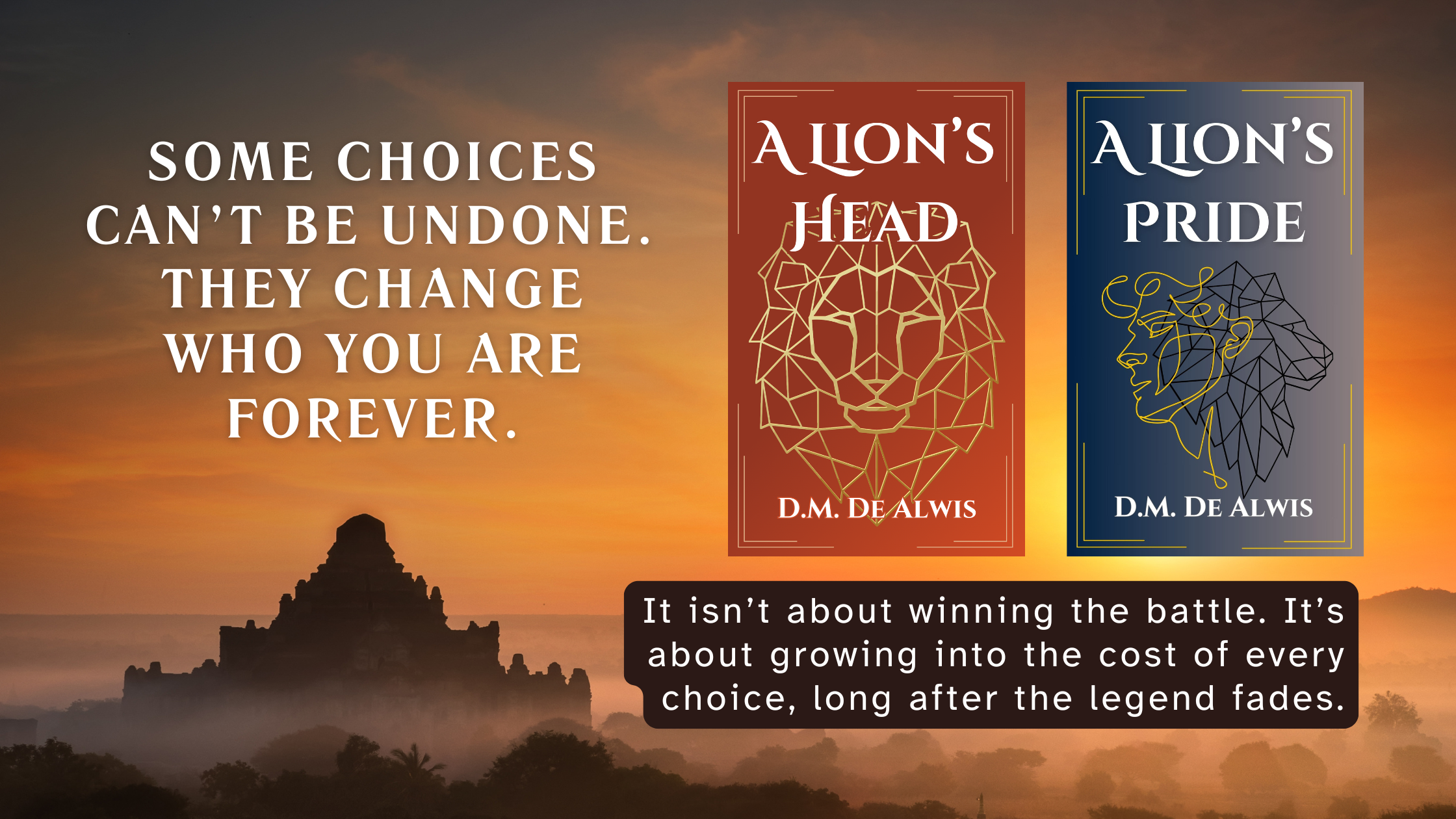
The Pawn of Samsara Duology
Inspired by the origin story of the Hindu god Narasimha.
The first two books serve as the foundation. Sinha and Isha's stories illustrate the rules of the universe. These rules have to be fixed, applicable in every instance to ever character moving forward, and carry through to subsequent books.
There is no exception to the rule.
Consider,
- The religious elements and how I respect the invisible lines drawn between belief and reality. There's a risk of upsetting people here.
- My MCs don't follow the usual hero's journey.
- Interesting things happen to the secondary characters who are human, who are reincarnated over the course of many books.
Setting up the Ground Rules for World Building
Sign up for the free monthly digest—The Erudite Bookworm.
- Continue reading about the ground rules I set for world-building through writing the Pawn of Samsara duology.
- Receive a free e-book—A Water Horse.
- Go deeper behind-the-scenes with what it's like to be an author navigating present day social media
A Background on the Characters
Sinha is righteous and protective to a fault. He is naive and inexperienced but his actions put him in a position of being feared as an authority. His righteous anger is driven by his desire for justice.
In subsequent books, Sinha is the immortal figure whose transformations are dictated by his actions and their consequences (karma-vipaka). He is an illustration of how the laws of the universe affect asura or demi-gods. As any good titan, he has earned his riddle of invincibility. Is he constant? No. He's changing—BUT he is invincible and so his life is that of an immortal. He is the outsider observer.
In contrast to Sinha, Isha is righteous and protective to a fault. He is established as a long-lived and experienced authority. His desire for control leads to uncertainty and chaos.
Isha becomes Mahishasura. We all know how his story ends (Wiki). But we won't get there by the end of A Lion's Pride. Instead, my goal was to establish him as our unfortunate, often misunderstood, resident baddie. He is Sinha's opposite. While well-intentioned, he is bullish. It will take much good karma to overcome his actions while under Hiranyakshipu's influence. Subsequent books will give him several redemption arcs but ultimately, he has to square his vicious irrational feelings for Sinha—that takes time.
The One Rule that Rules Them All
Action and the Consequence of that Action
The universe follows one unchanging rule. The law of action and consequence, Karma-vipaka from Buddhist Cosmology.
- Do good, and good will come to you.
- Do bad, and bad will come to you.
- Do nothing, and the situation will still unfold through your inaction.
- Do something, and you have effected it through your action.
Even with the best of intentions, the outcome can be unknown.
These novels are a study of entrapment in what is called Samsara the cycle of life and death. There is no escape.
There's no winning here save for renunciation and the path to end all suffering leading to enlightenment. I'm not writing Gautama Buddha's story here. Please note, the Pawn of Samsara predates the year of the Buddha's birth by an epoch (~10,000 yrs in A Lion's Pride).
Influence and manipulation
While every being in this universe has freedom of choice, they do not always have freedom of perception. Their choices are made in the moment—sometimes a knee jerk reaction, sometimes well intended and thought out, often influenced by human/god/demonic needs or thoughts. BUT, characters make their own decisions.
What does influence and manipulation look like?
- A god asks you to kill a king—commit murder, would you do it?
- Your wife asks you to take her home—how far would you go to make this happen?
- You see a need to make a choice based on keeping your people alive versus seeing them die or be corrupted.
- How do your surroundings affect your choices? Who in your surroundings may voice one way or another and how does that affect your decisions?
- If you're in a spiral of shame and blame, how do you respond? Do you make good decisions or lean into your worst desires?
- Once you've made a decision, can you renege?
There's a lot to unpack here.
Perception plays a huge role in accidents and mistakes—because that is life.
What about those greater gods? Where are they?
The universe acts in mysterious ways. To paraphrase the mystic, Caroline Myss, 'silence is also an answer to prayers'. Because we're working in a world that is ruled by karma, the greater gods must also keep those checks and balances in mind. While small miracles may be necessary to keep characters in play, larger miracles affect a larger number of people and all miracles will have some spin off result. For example, to suspend consequences to whenever they can be fulfilled.
So where are the greater gods? They are as tied to the rules of the universe as everyone else. They can only act at specific points in the story—either to set things in motion through manipulation and influence, or to save innocents after everything has already transpired. Often, they will absent themselves during the action sequence, why? Perhaps because they too would face consequences if they get too close.
To a Greater God, we are ants. To a god, we are animals. To Animals, we are gods. To demons, we are vulnerable.
In a cosmological point of view, they too are subject to the rules of the beings that they are influencing. There's a reason why someone who despised and worked to undo a Greater God is then reborn as their servant or devotee—obsession in the form of love or hatred is still obsession—carried over to the next life without context, love becomes hate and hate might become love.
Conclusion
By the end of the Pawn of Samsara duology, I've established the ground rules for this universe:
- Perception is everything.
- Karma-Vipaka | Action-consequence is the rule.
- It is possible to be influenced/manipulated by good (gods) and bad (demons) forces.
- Both Sinha and Isha are examples of how karma effects outcome as one becomes a god and the other a demon.
- Reincarnation: people die and are reborn, their lives are dictated by past life karma, how they live this life dictates future life karma.
Implied but not discussed: How relationships are affected by what happened or will happen in past and future lives.
What my readers know
- This is a multi-verse. In the beginning there is the immortal realm, the earth realm, the nether realm.
- This is a universe featuring many types of beings including gods, demons, and humans. Some are occasionally mentioned (e.g. naga, garuda) but with limited interaction—we're not immersed in those cultures so as not to overwhelm.
- There is religion but what we call religion may be fleeting. Instead it's the big ideas that persist. That there is a universal force that rules and many paths to enlightenment.
- Immortals are subject to change (usually their physical form, abilities, and location) as a consequence of their actions.
- Humans are reborn and have no recollection of their past, but may feel a connection with people they knew before.
What does this mean for A Monkey's Mask
I started this blog post talking about A Monkey's Mask, the next WIP.
I wrote the first two books focused on gods, greater gods, and their relationship to humans.
Now that the cosmology of the universe and the rules that all beings are under is defined—I can focus on adding new dimensions such as other beings—Yaksha(fae), Raksha(orcs), Naga(serpent people), Deva(elves). I can introduce mythological creatures such as our Ghandabas (cherub/imps/muses), Gurulu/Garuda (flying bird-man), and others.
I can also introduce a magic system for humans or rather, neanderthals and denovians—because my next philosophical question is of how global mythology and folklore teases out the different groups of sapians.
I understand how Tolkien establishes his world building with The Hobbit but then subsequently goes a little overboard with The Lord of the Rings. The first is a feint while the second is the skirmish. With writing style, writing ability, and most importantly the basic ground rules established—the next story will be epic.
More like this
 D.M. De Alwis
 D.M. De Alwis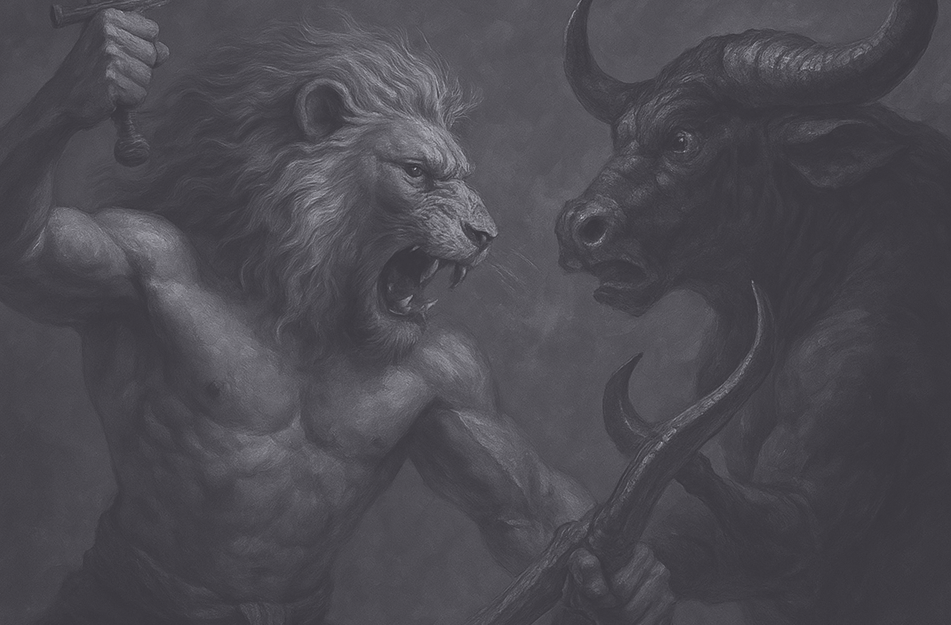





Member discussion