Recording My First Audiobook | A Lion's Head

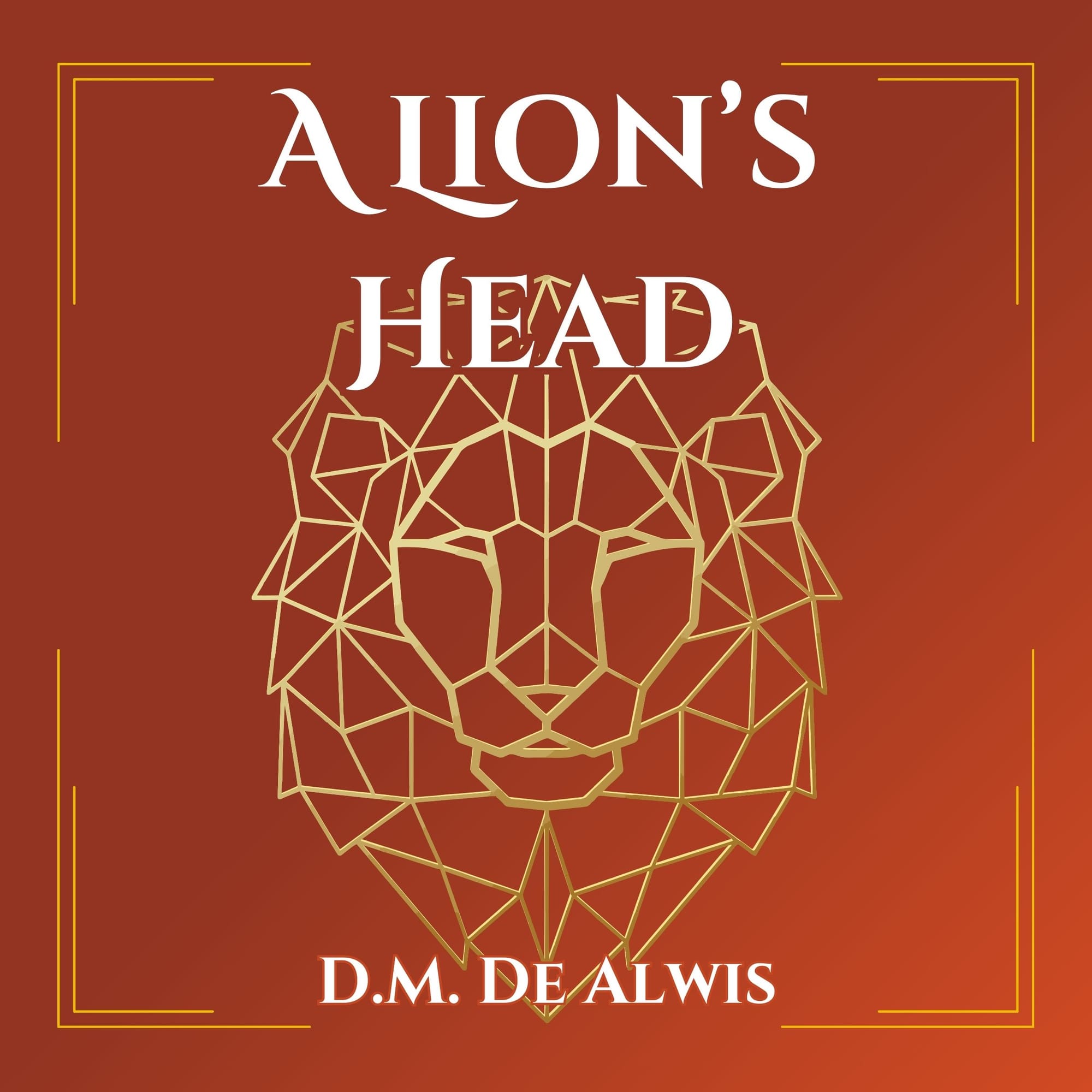
A Lion's Head by D.M. De Alwis
Audiobook Now Available on Apple Books, Kobo, Chirp, and more.
(Updated 24 Feb 2026)
I have too many clothes...
Should not be the first thought in my mind as I begin this blog post. When you live in Canada, you have clothing for all seasons. If you're lucky enough to have a small walk-in like me. . . it's tight.
It's a readily-available sound-dampened room for voice recordings. While I've never used my closet for the podcast—in the last six hours—I've learned that this is a rite of passage for self-made indie authors recording their first audiobook. It's no secret that I have no budget for this.
Yet, at a dozen folk have told me they only consume books via audio these days. This is the result of our productivity culture. We only have the time for 'recreational reading' or consuming while we're washing the dishes, folding the clothes, shovelling the driveway, or going for a run. To sit and mono-focus on a book is for some but not for many.
"If only your book were on audio, then I would be able to listen to it. For some reason, I can't focus enough to read," said many at this winter's holiday parties.
I am not someone who consumes her fiction via audio. The whole idea of it makes me cringe. Mainly because I have the attention of a squirrel and stop paying attention to who did what. I need to doodle or play a brainless video game to focus my attention while listening to audiobooks. Non-fiction is relatively one-dimensional and reads like a podcast. Stories, on the otherhand—stories are more complex and utilize more parts of my brain. I need to focus and read the words in the book. The letters and the patterns they form in my head help me keep track of who is talking to whom.
But to each their own—and who am I to say what works and doesn't work for some?
Challenge 1 - How do I record an audiobook?
I googled. Google provided.
YouTube video by self-published author Stephanie of Godlywood Girl (faith-based author)
- Use online software. I'm on a Macbook so GarageBand should do.
- Own a good microphone. I started a podcast earlier this year—I have a YETI Blue, one of the highest rated microphones available.
- Find a sound-dampened room you can book. One of my local libraries has a sound-dampened room. Most people record in their closet. The prospect of stepping outside can be too much and I find some benefit to being able to create my 'set up' for my working environment and then just leave it there.
- Record in snapshots so it's easier to compile the end book. This is something Stephanie in the video above emphasizes. I recorded some sample files. Making one instance in Garageband that has multiple tracks, I mute each track as I go but have a library of everything I've recorded at my fingertips in case I need to re-export the track in a different format at a later date when I get to final processing.
- Label each file, e.g. title, intro, quote, chapter 1, and so on.
- 00-1-ALionsHead-Title
- 00-2-ALionsHead-Dedication
- 00-3-ALionsHead-Quote
- 00-4-ALionsHead-authornote
- 01-Chapter1-ALionsHead
- 02-Chapter2-ALionsHead
- ...
- There's supposed to be a way to submit all your files in the appropriate format to your distribution platform of choice. Mine is probably going to be Inaudio and Findaway though I've discovered they're both the same company.
Keri @ Newshelves Books talks about Findaway, InAudio, & Spotify
Challenge 2 - Adventures with initial recordings
You take the car out for a test ride only to realize it's more complicated. For one, it comes with gears.
Plosives
I make a lot of what are called plosives. My recording voice can sometimes be soft and so I purposefully keep my lips close to the microphone. In the audio recording business this captures plosives: puffs of breath and sounds of lips smacking. My recording adventure is delayed for two days until Amazon delivers me what is called a windshield (the foam on the mic) and a pop filter (that flat disk-like thing you see singers using when recording).
How natural does the recording need to feel?
In the past with the podcast, I've made use of audio editing software like that of adobe podcast to clean up my dialogue (remove uh, ums, likes, and you knows) and the tech also adds a handy transcript that can be corrected. I don't need this for this operation. That makes my job a little easier. BUT, I've grown accustomed to recording multiple takes with the expectation that I would review that 'episode' and crop the excess during final finishing.
Instead, for the audiobook, I cut and delete the track as I go. If I fumble with a line or a tone of voice, I stop the recording, find the last smooth stopping point (flatline), cut, and delete my reading up to that point. Then I begin anew. Doing it all in one go means that I'm hopefully keeping my tone the same and because I haven't moved my setup, in that sound dampened room, no one will be the wiser.
Sometimes I also trip over words but it still comes out sounding alright. With long chapters, it's important to stop recording from time to time. There is no hard and fast rule saying you must read your chapter with no mistakes perfectly the first time.
I also think about splitting the audio track in places where I might want to later-on incorporate any sound effects. You can record your audio book as a listening programme. That is—if I'm that ambitious. I'm not.
Challenge 3 - Setting Realistic Goals for the Definition of Done
This brings me to the most important part of this journey. What do I define as enough? What do I trust is enough? I know nothing about putting together an audio book.
Setting Constraints on my Output
- A little research that I need to do to compare the quality of my output to another's:
- I must listen to at least one example of a fiction audiobook to check how they begin and finish. My experience is perhaps Brene Brown but I think I need to take out an audiobook maybe Percy Jackson from the library and listen.
- I must also get a few people to listen to the files to assess clarity and ability to follow. I'm no voice actor and while I can read a children's book to my kids and am well versed in making voices for Alice in Wonderland and the like—trying to distinguish between the different voices in my novel may be a challenge. I may need to practice how long I pause between characters and the enunciation. It might take multiple takes to get it right.
- Sound effects can get annoying if done wrong. Without an audio engineer I don't think at this time it's worthwhile to add.
Goal: A no frills audiobook published to expand my audience. Period. Anything that's a frill—Just say no.
More to come on this journey... stay tuned.


Member discussion